¿Fue correcto invitar a Yomil a la Universidad?Was it right to invite Yomil to the University?
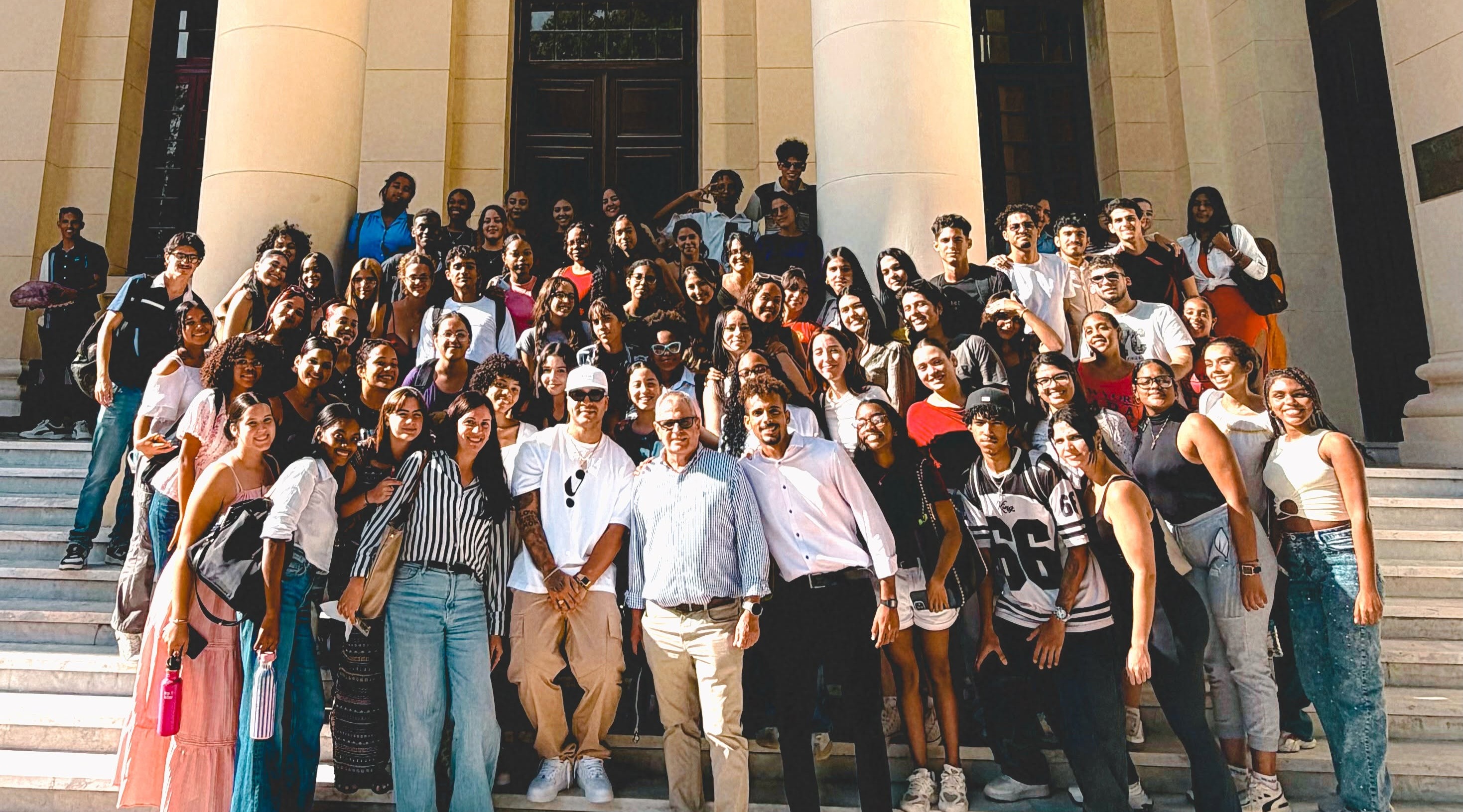
La Facultad de Derecho de la Universidad de La Habana contó esta semana, en su página oficial, una clase distinta: el invitado especial de una sesión de Derecho Constitucional fue Yomil, uno de los artistas urbanos más escuchados del país. La visita fue iniciativa de la profesora Amanda Laura Prieto Valdés y se organizó, en palabras de la propia Facultad, «en conspiración con la FEU» de la facultad. El detalle no pasó inadvertido: más de un lector se preguntó si la palabra buscada era «coordinación».
LO QUE CONTÓ LA FACULTAD
Según la nota institucional, el encuentro sirvió para reflexionar, desde las experiencias personales y profesionales del artista, sobre los derechos fundamentales, sus posibles vulneraciones y la importancia de las garantías jurídicas para su protección. Participaron estudiantes de segundo y otros años de la carrera. La Facultad lo resumió así: «formar juristas exige conectar la teoría con la realidad, fomentar el pensamiento crítico y comprender el valor del Derecho en la vida cotidiana». Hubo además un momento de celebración: una estudiante cumplía años y Yomil se sumó a cantarle felicidades. El carrusel de fotos y video que acompaña la nota muestra la foto de grupo en las escalinatas del edificio, al artista dirigiéndose a los estudiantes en el aula y una ronda de fotos con grupos de alumnos. La publicación acumuló cientos de reacciones en pocos días.
POR QUÉ DIVIDE OPINIONES
Yomil no es un invitado neutro. Es una figura central del género urbano, con una trayectoria seguida por cientos de miles de jóvenes, y también un artista que ha protagonizado polémicas por letras y pronunciamientos que tocaron temas sensibles del país. Esa doble condición explica la división que se vio en los propios comentarios de la publicación: hay quien celebra que la universidad hable el idioma cultural de sus estudiantes y quien considera que la invitación desdice del lugar donde se imparte la asignatura. Los defensores del encuentro subrayan un matiz: Yomil no fue a impartir Derecho, sino a compartir experiencias en una conversación sobre derechos. Los críticos responden que el escenario también comunica: no es lo mismo un intercambio en un centro cultural que una clase en la Facultad de Derecho de la Universidad de La Habana, la casa donde, en esa tradición docente, Félix Varela inició la enseñanza del Derecho Constitucional en Cuba.
EL FONDO DEL DEBATE
Detrás de la anécdota hay una pregunta seria sobre la universidad: ¿para qué sirve abrir el aula a figuras de la cultura popular? Una lectura dice que la formación de un jurista gana cuando la teoría se contrasta con la vida real de la sociedad que lo rodea, y que ignorar lo que los jóvenes escuchan y consumen es una forma de quedarse fuera de esa realidad. La otra lectura advierte que la legitimidad de una institución también se construye con sus símbolos, y que cada invitado dice algo sobre lo que la institución considera ejemplar. Ninguna de las dos lecturas es nueva, pero el caso las pone frente a frente con nombres y apellidos: una facultad, una profesora, una organización estudiantil y un reguetonero hablando de derechos fundamentales. Y usted, ¿qué opina? ¿Fue correcto o no invitar a Yomil a la Universidad? ¿Apertura a la cultura de los jóvenes o espectáculo fuera de lugar? El debate queda abierto en los comentarios.
The University of Havana's Faculty of Law told this week, on its official page, about an unusual class: the special guest at a Constitutional Law session was Yomil, one of the country's most listened-to urban artists. The visit was the initiative of professor Amanda Laura Prieto Valdés and was organized, in the Faculty's own words, "in conspiracy with the FEU" of the faculty. The detail did not go unnoticed: more than one reader wondered whether the word they were looking for was "coordination".
WHAT THE FACULTY SAID
According to the institutional note, the meeting served to reflect, from the artist's personal and professional experiences, on fundamental rights, their possible violations and the importance of legal guarantees to protect them. Second-year and other students took part. The Faculty summed it up this way: "training jurists requires connecting theory with reality, fostering critical thinking and understanding the value of Law in everyday life". There was also a moment of celebration: a student had a birthday and Yomil joined in singing to her. The photo and video carousel accompanying the note shows the group photo on the building's steps, the artist addressing the students in the classroom and a round of photos with groups of students. The post gathered hundreds of reactions in a few days.
WHY IT DIVIDES OPINIONS
Yomil is not a neutral guest. He is a central figure of the urban genre, with a career followed by hundreds of thousands of young people, and also an artist who has been at the center of controversies over lyrics and statements that touched sensitive topics in the country. That double condition explains the division seen in the post's own comments: some celebrate that the university speaks the cultural language of its students, while others consider that the invitation clashes with the place where the subject is taught. Defenders of the meeting stress one nuance: Yomil did not go to teach Law, but to share experiences in a conversation about rights. Critics reply that the setting also communicates: an exchange in a cultural center is not the same as a class at the University of Havana's Faculty of Law, the house where, in that teaching tradition, Félix Varela began the teaching of Constitutional Law in Cuba.
THE HEART OF THE DEBATE
Behind the anecdote there is a serious question about the university: what is the point of opening the classroom to figures of popular culture? One reading says that a jurist's training gains when theory is contrasted with the real life of the society around it, and that ignoring what young people listen to and consume is a way of being left out of that reality. The other reading warns that an institution's legitimacy is also built with its symbols, and that each guest says something about what the institution considers exemplary. Neither reading is new, but this case puts them face to face with names and surnames: a faculty, a professor, a student organization and a reggaeton artist talking about fundamental rights. And you, what do you think? Was it right or not to invite Yomil to the University? Openness to youth culture or a spectacle out of place? The debate is open in the comments.