EL SUR DE LA FLORIDA VOTÓSOUTH FLORIDA VOTED
🧵 EL SUR DE LA FLORIDA VOTÓ
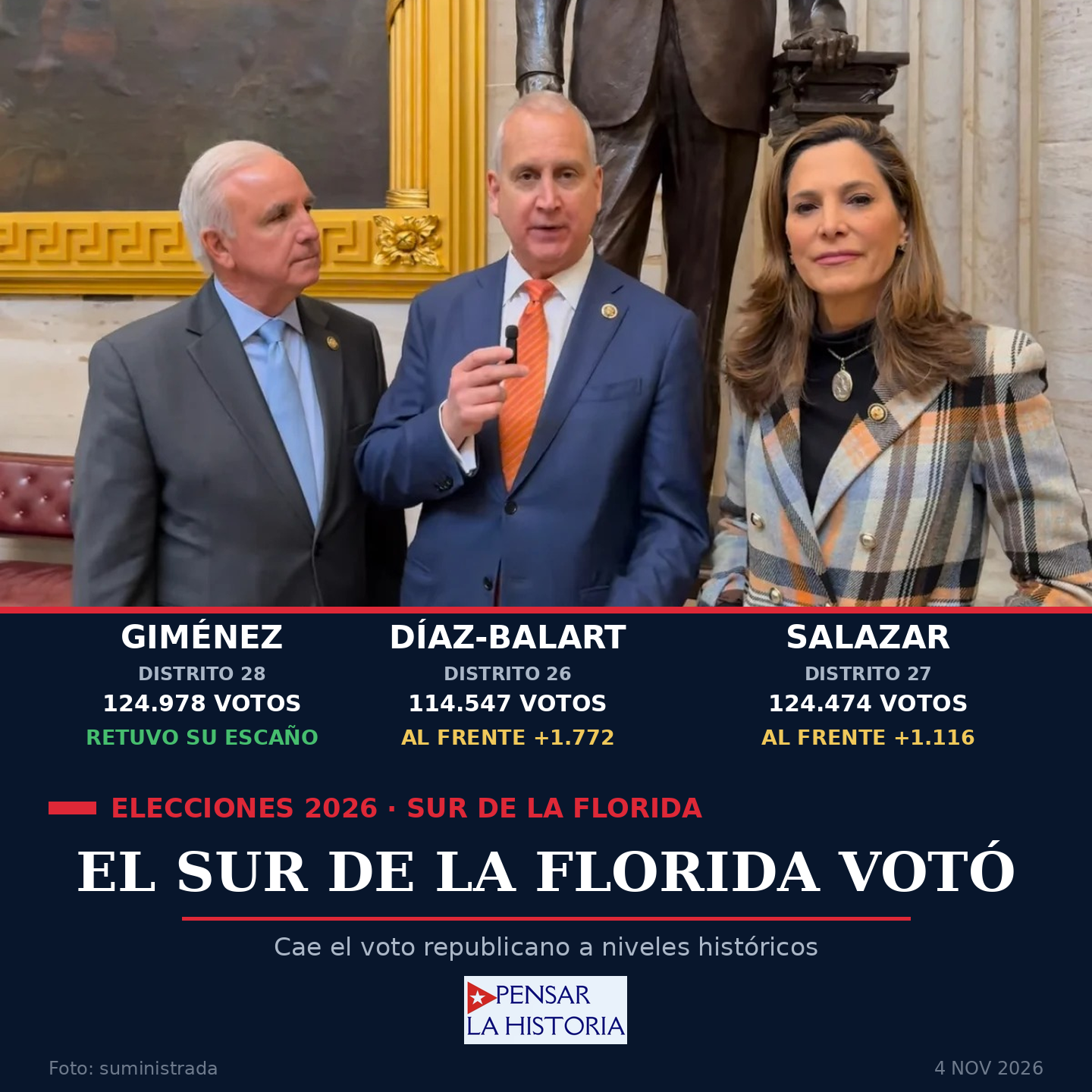
Lo que pasó anoche en el sur de la Florida no fue una victoria republicana: fue un aviso. Los tres escaños cubanoamericanos del Congreso, que por décadas se ganaban caminando, quedaron colgando de un hilo.
📍 DISTRITO 26 — Mario Díaz-Balart: 114.547 votos (49,9 %) contra 112.775 de Nicole Locklin. Ventaja de 1.772 votos. En 2024 ganó con el 70,9 %: en dos años perdió 21 puntos.
📍 DISTRITO 27 — María Elvira Salazar: 124.474 votos (50,2 %) contra 123.358 de Eliott Rodriguez. Ventaja de 1.116 votos, el 0,46 %, dentro del margen de recuento automático.
📍 DISTRITO 28 — Carlos Giménez retuvo su escaño con 124.978 votos (52,9 %), pero también por debajo de sus márgenes históricos.
Y en Miami-Dade, el condado que era el bastión republicano, la candidata demócrata al Senado ganó por casi 56.000 votos. El mapa se está moviendo.
¿QUÉ HAY DETRÁS? El voto cubanoamericano ya no es un cheque en blanco. La política de mano dura contra los inmigrantes — deportaciones, fin de protecciones como el TPS, familias separadas por un estatus — se sintió en los barrios donde esos mismos congresistas piden el voto. Y la política hacia Cuba, usada durante años como consigna electoral, ya no tapa lo que la gente vive en su casa: cuando la migra toca a la familia, el discurso deja de funcionar.
LA CUENTA PARA 2028 ES CLARA: si los demócratas avanzaron 21 puntos en el Distrito 26 en un solo ciclo, esos tres escaños dejan de ser «históricos» y pasan a ser disputados. Los republicanos lo saben: anoche no celebraron, contaron votos hasta el final.
Pregunta para el debate: ¿fue el castigo por la política migratoria, por la política hacia Cuba, o ya es un cambio de fondo en el voto del sur de la Florida?
Fuentes: División de Elecciones de la Florida (corte 7:28 a. m.) y Associated Press. Los distritos 26 y 27 siguen sin declaración oficial de ganador.
#Elecciones2026 #Miami #Florida #Cuba
🧵 SOUTH FLORIDA VOTED
What happened last night in South Florida was not a Republican victory: it was a warning. The three Cuban-American seats in Congress, which for decades were won walking away, were left hanging by a thread.
📍 DISTRICT 26 — Mario Díaz-Balart: 114,547 votes (49.9%) against 112,775 for Nicole Locklin. A margin of 1,772 votes. In 2024 he won with 70.9%: in two years he lost 21 points.
📍 DISTRICT 27 — María Elvira Salazar: 124,474 votes (50.2%) against 123,358 for Eliott Rodriguez. A margin of 1,116 votes, 0.46%, within the automatic recount margin.
📍 DISTRICT 28 — Carlos Giménez held his seat with 124,978 votes (52.9%), but also below his historic margins.
And in Miami-Dade, the county that was the Republican bastion, the Democratic Senate candidate won by nearly 56,000 votes. The map is moving.
WHAT'S BEHIND IT? The Cuban-American vote is no longer a blank check. The hard-line policy against immigrants — deportations, the end of protections like TPS, families separated by a status — was felt in the neighborhoods where those same members of Congress ask for votes. And the policy toward Cuba, used for years as an electoral slogan, no longer covers what people live at home: when immigration enforcement touches the family, the speech stops working.
THE MATH FOR 2028 IS CLEAR: if Democrats advanced 21 points in District 26 in a single cycle, those three seats stop being «historic» and become contested. Republicans know it: last night they did not celebrate, they counted votes to the very end.
Question for the debate: was it punishment for the immigration policy, for the Cuba policy, or is it already a fundamental shift in South Florida's vote?
Sources: Florida Division of Elections (7:28 a.m. cut) and Associated Press. Districts 26 and 27 still have no officially declared winner.
#Elecciones2026 #Miami #Florida #Cuba
Ver en Facebook ↗See on Facebook ↗