Díaz-Canel comprueba en La Taza de Vento el plan contra el déficit de aguaDíaz-Canel checks the plan against the water shortage at La Taza de Vento
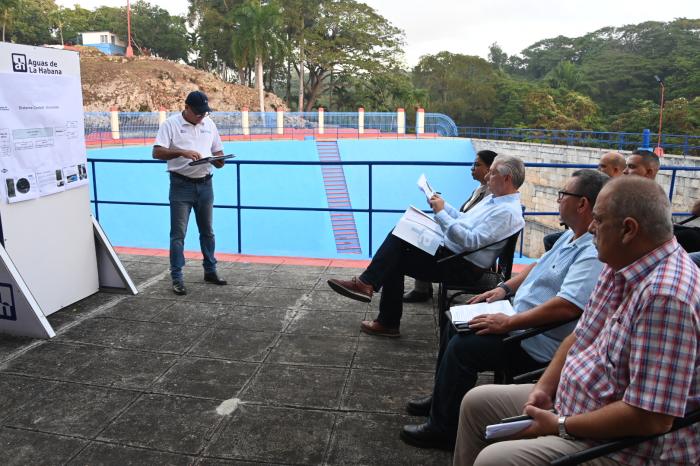
El presidente Miguel Díaz-Canel visitó en la mañana de este jueves La Taza de Vento, en el municipio capitalino de Boyeros, para comprobar la marcha del Programa Integral de Aseguramiento del Abasto de Agua, que nació para la capital y hoy abarca a todo el país. «En estos últimos diez días creo que hemos avanzado integralmente, pero hay que seguir», valoró el mandatario en la instalación, parte del Acueducto de Albear, obra de 1893 incluida en la Red Global de Museos del Agua de la Unesco.
El vicepresidente primero del Instituto Nacional de Recursos Hidráulicos, Javier Toledo Tápanes, informó que los afectados por el déficit de agua en la capital ascienden a unos 255.000, frente a los 577.000 del inicio del programa, y previó que la cifra siga bajando en los próximos 15 días. En la instalación se reportaron el pozo Vento recuperado, las estaciones de bombeo restablecidas y el túnel en recuperación, y se alistan equipos nuevos en las fuentes de abasto El Gato, Cuenca Sur y Aguada del Cura.
Díaz-Canel indagó además por la situación del abasto en Manzanillo, en Santiago de Cuba y en los municipios capitalinos de Cotorro y Arroyo Naranjo, señalados entre los de situación más difícil. Lo acompañaron la viceprimera ministra Inés María Chapman Waugh, el ministro de Energía y Minas, Vicente de la O Levy, y el presidente del INRH, Antonio Rodríguez Rodríguez.
Fuente: Granma, 19 de noviembre de 2026.
President Miguel Díaz-Canel visited La Taza de Vento, in the Havana municipality of Boyeros, on Thursday morning to check on the Comprehensive Water Supply Assurance Program, which began in the capital and now covers the whole country. "In these last ten days I believe we have advanced across the board, but we must keep going," the president said at the facility, part of the Albear Aqueduct, an 1893 work included in UNESCO's Global Network of Water Museums.
Javier Toledo Tápanes, first vice president of the National Institute of Hydraulic Resources, reported that those affected by the water shortage in the capital now number about 255,000, down from 577,000 at the start of the program, and forecast that the figure will keep falling over the next 15 days. The Vento well has been recovered, the pumping stations restored and the tunnel is being recovered, while new equipment is being readied at the El Gato, Cuenca Sur and Aguada del Cura supply sources.
Díaz-Canel also asked about the supply situation in Manzanillo, in Santiago de Cuba and in the capital municipalities of Cotorro and Arroyo Naranjo, singled out among the most difficult. He was accompanied by Deputy Prime Minister Inés María Chapman Waugh, Energy and Mines Minister Vicente de la O Levy, and INRH president Antonio Rodríguez Rodríguez.
Source: Granma, November 19, 2026.