LA MAFIA DE MIAMI SÍ EXISTE: 2.193 VOTOS SE ESFUMARON EN EL DISTRITO 26 Y NADIE LO EXPLICATHE MIAMI MAFIA IS REAL: 2,193 VOTES VANISHED IN DISTRICT 26 AND NO ONE EXPLAINS IT
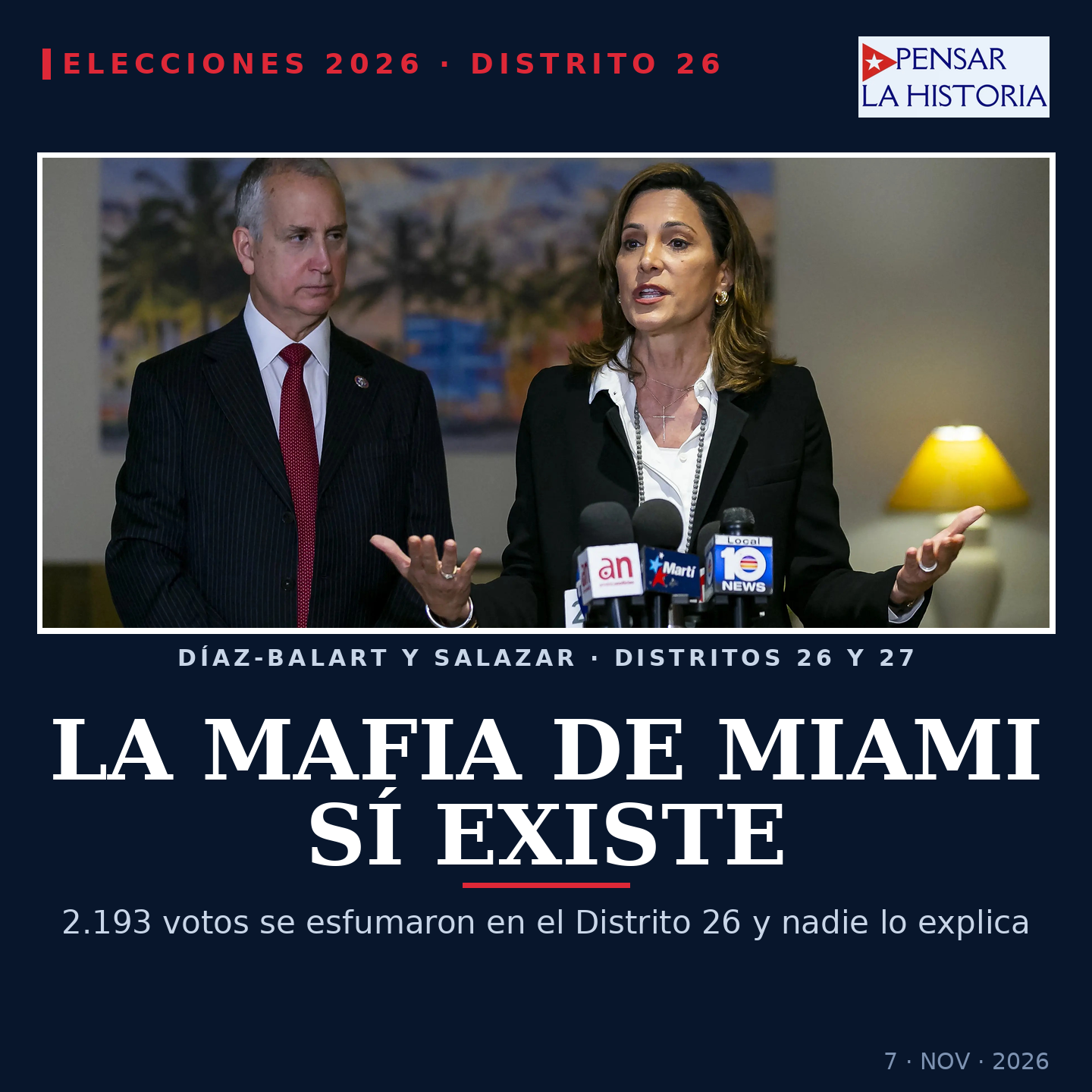
LA MAFIA DE MIAMI SÍ EXISTE: 2.193 VOTOS SE ESFUMARON EN EL DISTRITO 26 Y NADIE LO EXPLICA
La noche del 3 de noviembre, con el 99 % estimado, Nicole Locklin aparecía al frente del Distrito 26 de Florida con 115.320 votos, según la gráfica de CNN, y su campaña celebró la victoria. Horas después, el total se había desplomado y Mario Díaz-Balart aparecía delante. La explicación que corrió fue que Associated Press había cometido un error de entrada de datos. Esa explicación ya no se sostiene.
civicAPI, un recopilador independiente que recibe los datos de los condados igual que AP, documentó en tiempo real lo que pasó dentro de la cifra de Miami-Dade: el condado estuvo reportando 48.822 votos para Locklin y, en un punto de la noche, esa cifra cambió a 46.629. Son 2.193 votos menos en los datos que transmitía el propio condado. Su conteo, escribió civicAPI, refleja ese total.
La comparación que importa es esta: según los resultados no oficiales del estado, Díaz-Balart aventaja a Locklin por 1.704 votos (114.578 a 112.874). La rebaja aplicada a la cifra de Locklin en Miami-Dade, 2.193 votos, es mayor que la ventaja final completa.
Las versiones no cuadran entre sí. AP dice que el error fue suyo, de entrada de datos. civicAPI precisa que el número inflado venía en la transmisión del condado, aunque la causa última la dejó como una suposición. La campaña de Díaz-Balart sostiene que esos votos nunca existieron en los totales oficiales. Y el Departamento de Elecciones de Miami-Dade, que dirige Alina García y que es el dueño del dato original, no ha publicado explicación alguna. Locklin, que contrató a un abogado para examinar lo ocurrido, declaró que sigue esperando una comunicación oficial de las oficinas electorales.
La retractación de Mancebo. Este 7 de noviembre, el comentarista Mancebo, que había difundido la versión del error de AP, publicó un video rectificando: tras revisar el registro de civicAPI concluyó que «el error, si es que fue un error, fue del condado Miami-Dade» y que «puede haber problemas ahí», porque la caída de votos supera la ventaja con la que su oponente «está perdiendo por 1.700», en sus palabras sobre Locklin.
No es el único distrito bajo la misma oficina. En el Distrito 27 se ordenó un recuento con una ventaja de solo 1.090 votos para María Elvira Salazar, y la campaña de Eliott Rodriguez presentó una demanda federal para apartar a Alina García del proceso por un alegado conflicto de interés. García no se ha recusado.
AP, cuatro días después, sigue sin declarar ganador en el Distrito 26. La certificación estatal está fijada para el 17 de noviembre.
Queda una pregunta sin responder, y no la tiene que responder la prensa ni las redes: la tiene que responder el Departamento de Elecciones de Miami-Dade. ¿Por qué la cifra que transmitía para Nicole Locklin bajó 2.193 votos en mitad de la noche? Mientras esa explicación no exista, cada votante del sur de la Florida tiene motivos para hacerse la misma pregunta: si el número puede cambiar así, ¿qué garantiza que tu voto cuente?
#MiamiDade #Distrito26 #Elecciones2026 #PensarLaHistoria
THE MIAMI MAFIA IS REAL: 2,193 VOTES VANISHED IN DISTRICT 26 AND NO ONE EXPLAINS IT
On the night of November 3, with an estimated 99% counted, Nicole Locklin was shown leading Florida's District 26 with 115,320 votes, according to CNN's graphic, and her campaign celebrated victory. Hours later, the total had collapsed and Mario Díaz-Balart was ahead. The explanation that went around was that the Associated Press had made a data entry error. That explanation no longer holds.
civicAPI, an independent aggregator that receives county data just as AP does, documented in real time what happened inside Miami-Dade's figure: the county was reporting 48,822 votes for Locklin and, at some point in the night, that figure changed to 46,629. That is 2,193 fewer votes in the data the county itself was transmitting. Its count, civicAPI wrote, reflects that total.
The comparison that matters is this one: according to the state's unofficial results, Díaz-Balart leads Locklin by 1,704 votes (114,578 to 112,874). The reduction applied to Locklin's Miami-Dade figure, 2,193 votes, is larger than the entire final margin.
The versions do not square with each other. AP says the error was its own, a data entry mistake. civicAPI states that the inflated number came in the county's transmission, although it left the ultimate cause as a supposition. The Díaz-Balart campaign maintains those votes never existed in the official totals. And the Miami-Dade Elections Department, headed by Alina García and owner of the original data, has published no explanation at all. Locklin, who hired an attorney to examine what happened, said she is still waiting for an official communication from the elections offices.
Mancebo's retraction. On November 7, commentator Mancebo, who had spread the AP error version, published a video correcting himself: after reviewing civicAPI's record, he concluded that "the error, if it was an error, was Miami-Dade County's" and that "there may be problems there," because the vote drop exceeds the margin by which Locklin is losing, some 1,700 votes.
It is not the only district under the same office. In District 27 a recount was ordered with a lead of only 1,090 votes for María Elvira Salazar, and the Eliott Rodriguez campaign filed a federal lawsuit to remove Alina García from the process over an alleged conflict of interest. García has not recused herself.
AP, four days later, still has not declared a winner in District 26. State certification is set for November 17.
One question remains unanswered, and it is not for the press or social media to answer it: the Miami-Dade Elections Department has to. Why did the figure it was transmitting for Nicole Locklin drop by 2,193 votes in the middle of the night? As long as that explanation does not exist, every voter in South Florida has reason to ask the same question: if the number can change like that, what guarantees that your vote counts?
#MiamiDade #District26 #2026Elections #PensarLaHistoria
Ver en Facebook ↗See on Facebook ↗