Los 100 millones, cuenta completa: lo que llega, a quiénes llega y dónde queda el dineroThe 100 million, full count: what arrives, who it reaches and where the money stays
El anuncio
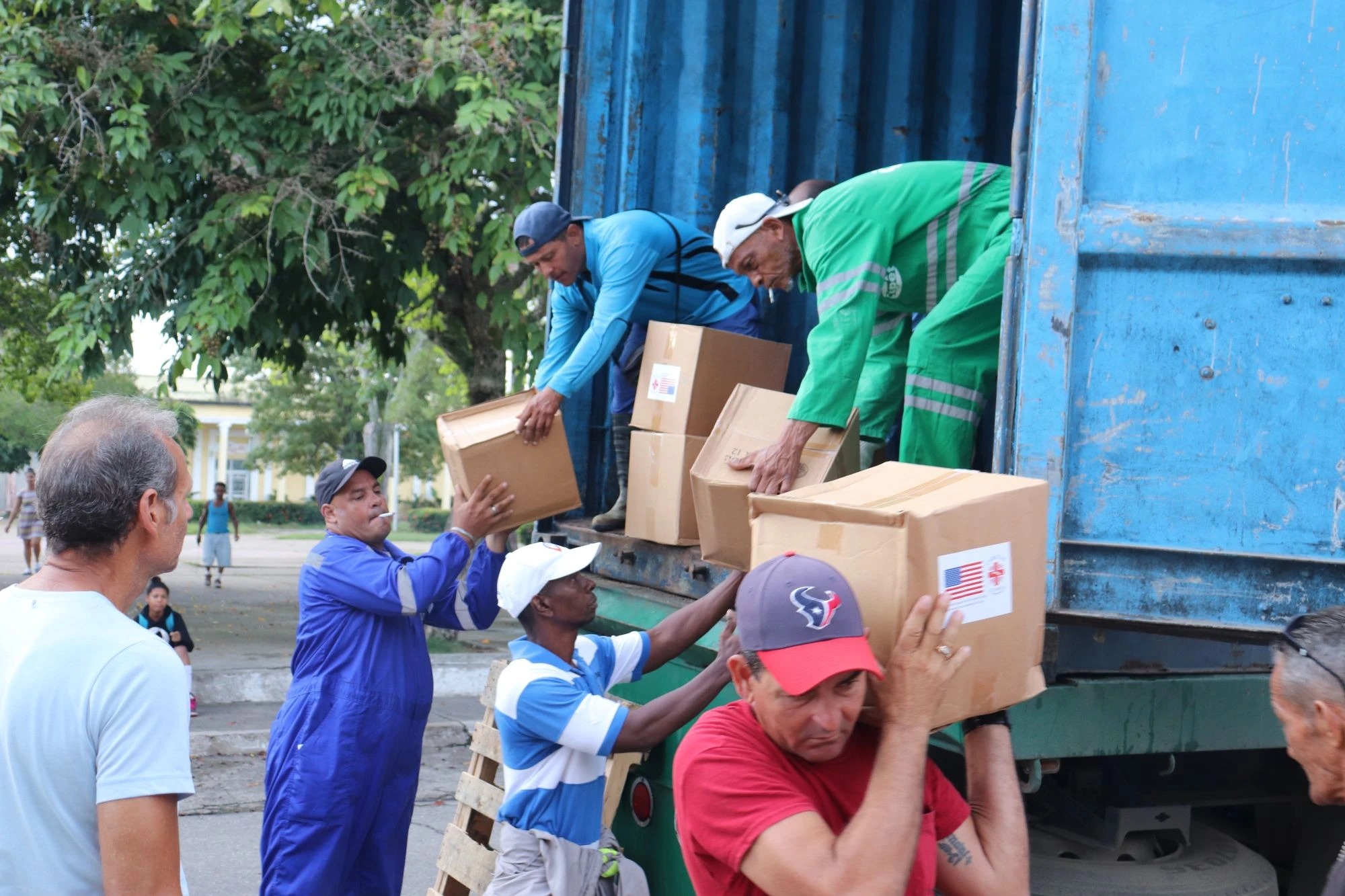
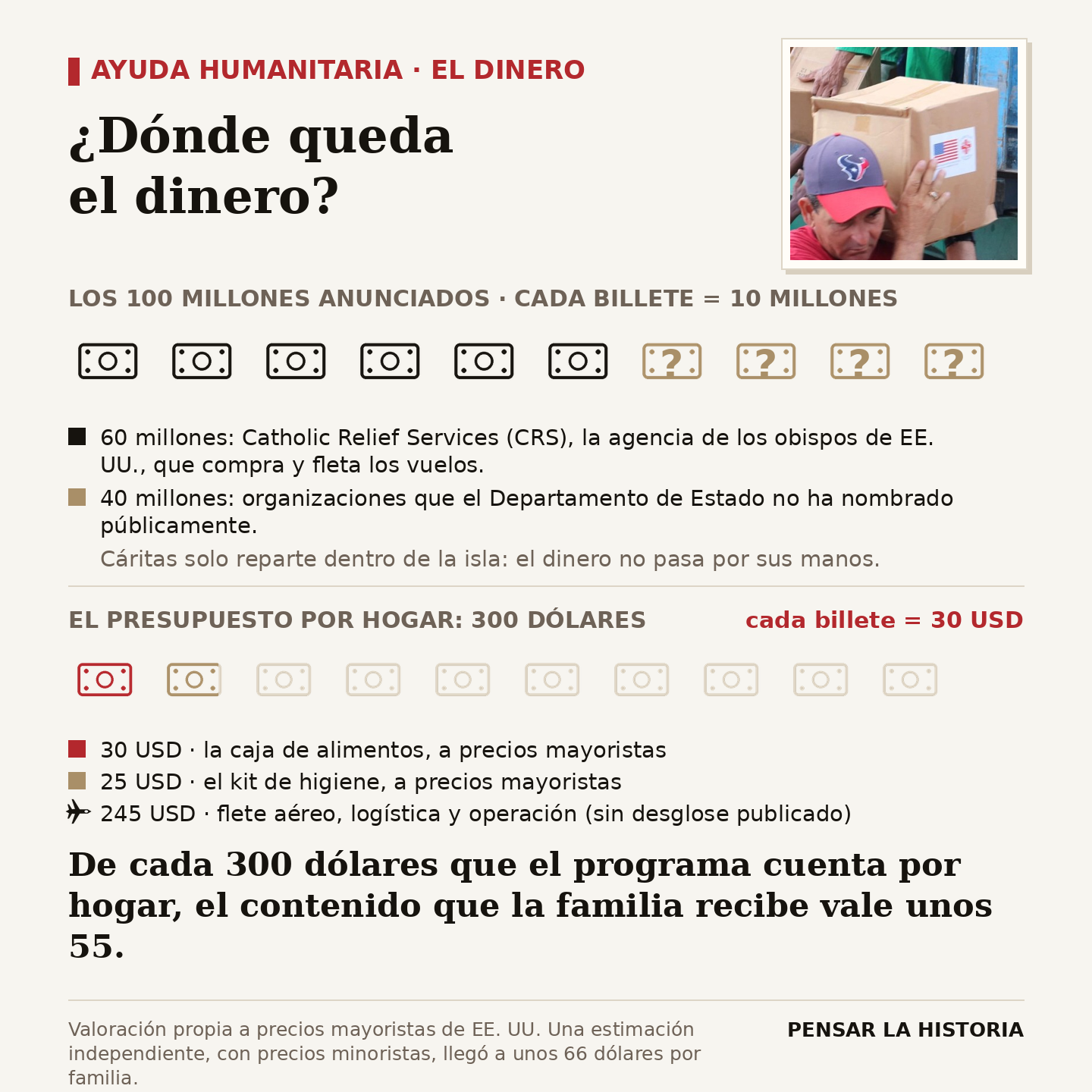
En mayo de 2026, el secretario de Estado, Marco Rubio, anunció en Roma, tras reunirse con el papa León XIV, un paquete de 100 millones de dólares en asistencia humanitaria directa para el pueblo cubano, fuera de las manos del Gobierno cubano. De ese total, 60 millones los administra Catholic Relief Services (CRS), la agencia humanitaria de los obispos de Estados Unidos, con sede en Baltimore: CRS compra los productos y fleta los vuelos. Cáritas, dentro de la isla, se limita a repartir: el dinero no pasa por sus manos. Los otros 40 millones fueron asignados a organizaciones humanitarias independientes que el Departamento de Estado no ha nombrado públicamente.
La meta, en cifras
El 21 de julio, CRS fijó el objetivo de su parte: entregar alimentos de emergencia y artículos de higiene a cerca de 200.000 hogares, más de 500.000 personas, además de un componente de colchones y mantas para unas 7.000 personas. Ese mismo día aterrizó en La Habana el primer cargamento, con módulos para 700 familias, y la distribución comenzó el 23 de julio, según Associated Press.
Cada vuelo, lo mismo
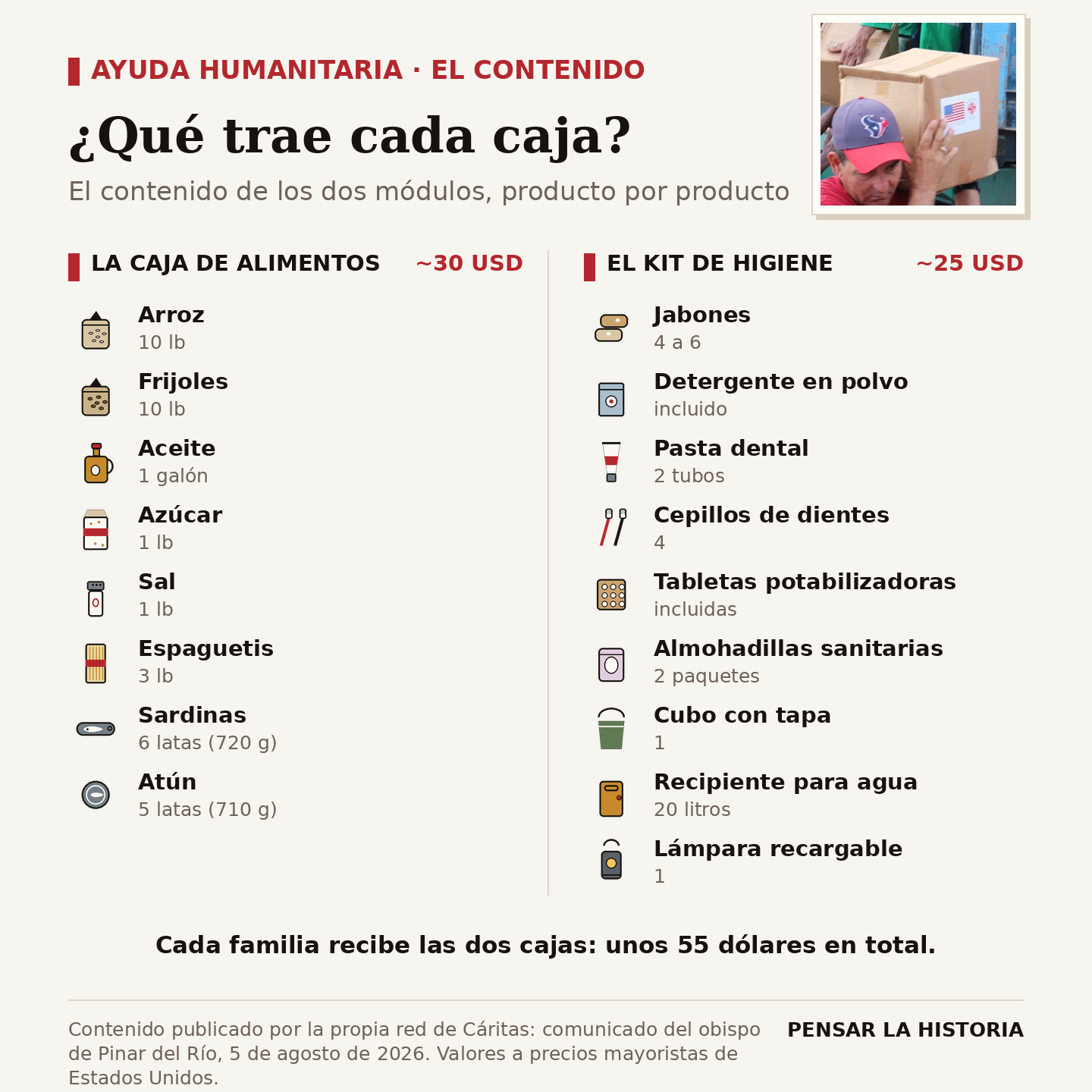
Desde entonces, el patrón se repite: cada avión trae 700 módulos de alimentos y 700 kits de higiene. Su contenido exacto ya es público, porque lo difundió la propia red que lo reparte: el comunicado del obispo de Pinar del Río del 5 de agosto lo detalla producto por producto. El módulo de alimentos trae diez libras de arroz, diez libras de frijoles, un galón de aceite, una libra de azúcar, una libra de sal, tres libras de espaguetis, seis latas de sardinas (720 gramos) y cinco latas de atún (710 gramos). El kit de higiene trae jabones, detergente en polvo, dos tubos de pasta dental, cuatro cepillos de dientes, tabletas para potabilizar agua, dos paquetes de almohadillas sanitarias, un cubo con tapa, un recipiente de veinte litros para guardar agua y una lámpara recargable. Los beneficiarios se seleccionan entre los hogares con inseguridad alimentaria y dificultades de acceso al agua, con prioridad para los mayores de 60 años que viven solos, las embarazadas y lactantes, los niños menores de cinco años y las personas con discapacidad o encamadas.
El mapa de los repartos
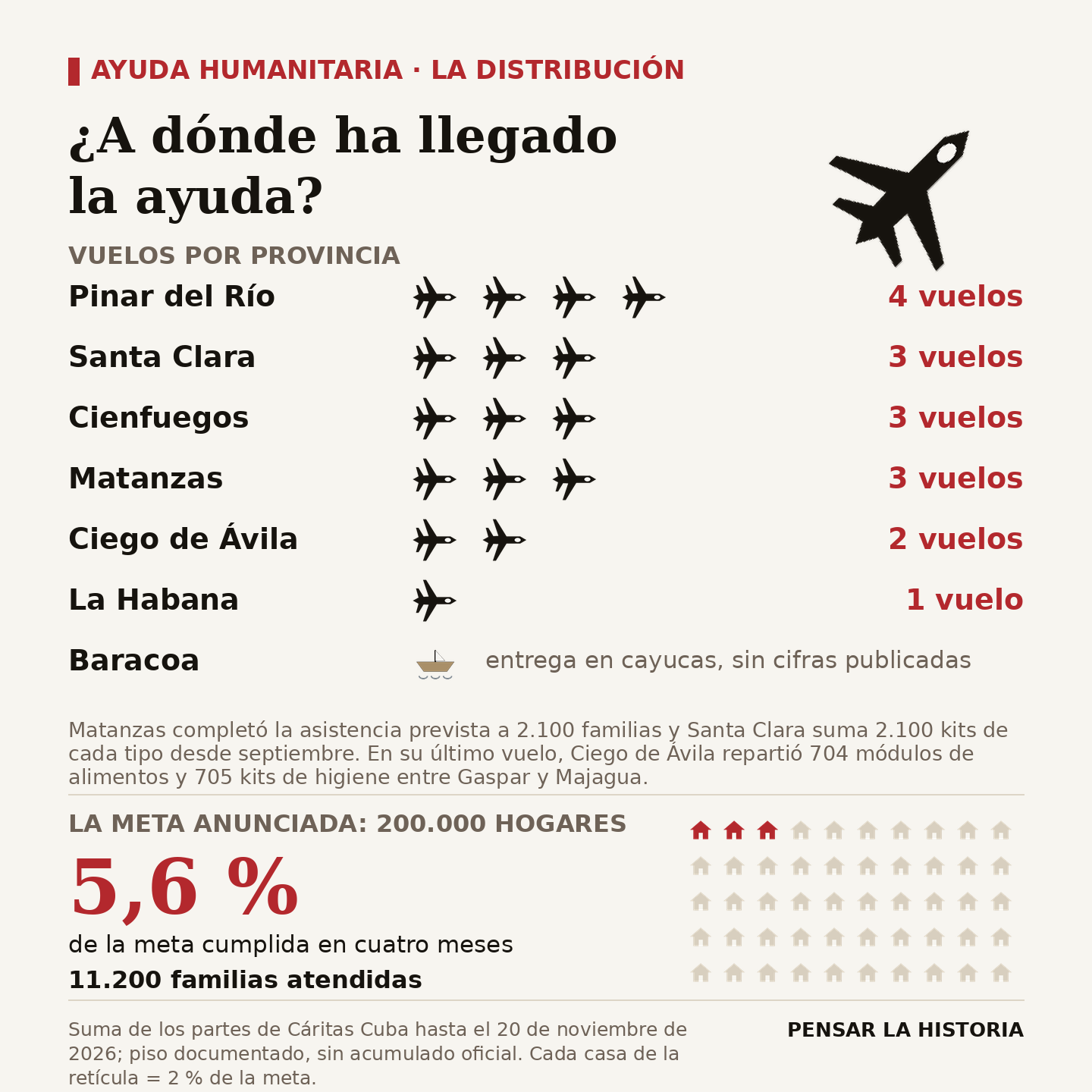
El primer vuelo, el del 21 de julio, fue para La Habana: 700 familias. Pinar del Río ha recibido cuatro: el 8 de octubre (Candelaria y Quiebra Hacha), el 27 de octubre (Guanajay y Bahía Honda), el 12 de noviembre (Bahía Honda, Guanajay y la comunidad de San Martín de Porres, en Taco Taco) y el 18 de noviembre (Bahía Honda, Taco Taco y, por primera vez, San Juan y Martínez). Santa Clara ha recibido tres desde septiembre para las comunidades de Villa Clara y Sancti Spíritus: Quemado de Güines y Rancho Veloz, Guasimal el 29 de octubre y Banao el 17 de noviembre. Cienfuegos, tres: el segundo llegó el 3 de noviembre y al día siguiente se repartieron sus 1.400 cajas en Cruces; el tercero aterrizó el 19 de noviembre, destinado a Palmira, donde la distribución a unos 700 hogares comenzó el viernes 20. Matanzas acumula tres vuelos para la Vicaría Nuestra Señora de la Caridad: el tercero, del 11 de noviembre, trajo 700 módulos de higiene y completó la asistencia prevista para 2.100 familias de Alacranes, San Antonio de Cabezas, Unión de Reyes y Bolondrón; un cuarto envío está anunciado para finales de mes. Ciego de Ávila, dos: el 6 de octubre y el 11 de noviembre, este último con 704 módulos de alimentos y 705 de higiene repartidos entre Gaspar y Majagua. Y el 17 de noviembre, los voluntarios de la diócesis de Guantánamo-Baracoa llevaron las cajas en cayucas a Boca de Miel, Las María, Majana y Majayara; de esa entrega, Cáritas no publicó cifras.
La suma
Cáritas Cuba no publica un acumulado: informa envío por envío. Sumando sus partes, las cajas con cifra expresa pasan de 21.000, y las familias atendidas suman del orden de 11.200. Es un piso, no un total cerrado: la entrega de Baracoa no trajo números y puede haber repartos menores sin parte público.
El ritmo
Entre el 21 de julio y el 20 de noviembre han pasado cuatro meses. 11.200 familias sobre una meta de 200.000 hogares es el 5,6 %. Al ritmo documentado, unas 2.800 familias al mes, alcanzar la meta llevaría casi seis años. La aritmética no es un pronóstico, porque el programa puede acelerarse; es, simplemente, la distancia que hoy separa el anuncio de la entrega.
Cuánto vale lo que llega
Valorado el contenido de las dos cajas a precios al por mayor en Estados Unidos, la cuenta es la siguiente: el módulo de alimentos ronda los 30 dólares y el kit de higiene, unos 25. En total, unos 55 dólares por familia. Una estimación independiente, hecha con precios minoristas y de venta en línea, llegó a una cifra parecida: unos 66 dólares.
Dónde queda el dinero
Frente a eso, el presupuesto del programa dice otra cosa. Catholic Relief Services recibió 60 millones de dólares con la meta declarada de llegar a cerca de 200.000 hogares: la división da 300 dólares por hogar. La diferencia entre los 55 dólares de las cajas y los 300 por hogar corresponde, según las organizaciones, al flete aéreo desde Miami, la logística de distribución dentro de la isla y los costos de operación del programa. Ese desglose, sin embargo, no se ha hecho público: ni CRS ni Cáritas han publicado cuánto del total va a flete, cuánto a logística y cuánto a operación.
Lo que sí se sabe es dónde se gasta la mayor parte: en Estados Unidos. Los productos se compran a proveedores estadounidenses, los vuelos los fleta una aerolínea de carga de Miami y la administración corre por cuenta de CRS en Baltimore. A la isla llega la mercancía; el dinero se queda en el norte. Y del total de los cien millones hay otra partida sin cuentas públicas: los 40 millones asignados a otras organizaciones humanitarias cuyos nombres el Departamento de Estado no ha publicado.
Lo que no está en discusión
La ayuda existe, llega y se agradece. En Cruces, una beneficiaria de 64 años lo resumió ante los voluntarios: «Estoy contenta. Qué otra cosa puedo decir. Tenemos que ser agradecidos». Una madre soltera de cuatro niños confesó que no tiene para comprar todo lo que le dieron. Nada de eso está en debate. Lo que se discute es otra cosa: si un anuncio de 100 millones puede sostenerse con vuelos de 700 familias.
De estos repartos, no ha informado la prensa Cubana: las cifras públicas disponibles son las de Cáritas y las de los medios que siguen sus partes.
¿El problema es el tamaño del anuncio o el ritmo de la entrega?
Nota de corrección (22 de noviembre): la primera versión de este conteo omitió los tres envíos a la diócesis de Santa Clara y el cuarto envío a Pinar del Río. Las cifras ya están actualizadas.
The announcement
In May 2026, Secretary of State Marco Rubio announced in Rome, after meeting Pope Leo XIV, a package of 100 million dollars in direct humanitarian assistance for the Cuban people, outside the hands of the Cuban Government. Of that total, 60 million is administered by Catholic Relief Services (CRS), the humanitarian agency of the United States bishops, based in Baltimore: CRS buys the products and charters the flights. Cáritas, inside the island, only distributes: the money does not pass through its hands. The other 40 million was assigned to independent humanitarian organizations that the State Department has not publicly named.
The goal, in figures
On July 21, CRS set the target for its share: to deliver emergency food and hygiene items to nearly 200,000 households, more than 500,000 people, plus a component of mattresses and blankets for some 7,000 people. That same day the first shipment landed in Havana, with modules for 700 families, and distribution began on July 23, according to Associated Press.
Every flight, the same
Since then, the pattern repeats: each plane brings 700 food modules and 700 hygiene kits. Their exact contents are already public, because the network that distributes them released them: the August 5 statement by the bishop of Pinar del Río details them product by product. The food module contains ten pounds of rice, ten pounds of beans, a gallon of oil, a pound of sugar, a pound of salt, three pounds of spaghetti, six cans of sardines (720 grams) and five cans of tuna (710 grams). The hygiene kit contains soaps, powdered detergent, two tubes of toothpaste, four toothbrushes, water purification tablets, two packages of sanitary pads, a bucket with a lid, a twenty-liter container for storing water and a rechargeable lamp. Beneficiaries are selected among households with food insecurity and difficulties accessing water, with priority for people over 60 who live alone, pregnant and nursing women, children under five and people with disabilities or who are bedridden.
The map of the distributions
The first flight, on July 21, was for Havana: 700 families. Pinar del Río has received four: on October 8 (Candelaria and Quiebra Hacha), on October 27 (Guanajay and Bahía Honda), on November 12 (Bahía Honda, Guanajay and the community of San Martín de Porres, in Taco Taco) and on November 18 (Bahía Honda, Taco Taco and, for the first time, San Juan y Martínez). Santa Clara has received three since September for the communities of Villa Clara and Sancti Spíritus: Quemado de Güines and Rancho Veloz, Guasimal on October 29 and Banao on November 17. Cienfuegos, three: the second arrived on November 3 and the next day its 1,400 boxes were distributed in Cruces; the third landed on November 19, destined for Palmira, where distribution to some 700 households began on Friday the 20th. Matanzas totals three flights for the Vicariate of Our Lady of Charity: the third, on November 11, brought 700 hygiene modules and completed the planned assistance for 2,100 families in Alacranes, San Antonio de Cabezas, Unión de Reyes and Bolondrón; a fourth shipment is announced for the end of the month. Ciego de Ávila, two: on October 6 and on November 11, the latter with 704 food modules and 705 hygiene kits distributed between Gaspar and Majagua. And on November 17, volunteers from the diocese of Guantánamo-Baracoa took the boxes by cayuca to Boca de Miel, Las María, Majana and Majayara; of that delivery, Cáritas published no figures.
The sum
Cáritas Cuba does not publish a running total: it reports shipment by shipment. Adding up its reports, the boxes with an explicit figure exceed 21,000, and the families served total around 11,200. It is a floor, not a closed total: the Baracoa delivery brought no numbers and there may be smaller distributions without a public report.
The pace
Between July 21 and November 20, four months have passed. 11,200 families against a goal of 200,000 households is 5.6%. At the documented pace, some 2,800 families a month, reaching the goal would take almost six years. The arithmetic is not a forecast, because the program can accelerate; it is, simply, the distance that today separates the announcement from the delivery.
What what arrives is worth
Valuing the contents of the two boxes at wholesale prices in the United States, the count is as follows: the food module runs about 30 dollars and the hygiene kit, about 25. In total, some 55 dollars per family. An independent estimate, made with retail and online prices, reached a similar figure: about 66 dollars.
Where the money stays
Against that, the program's budget says something else. Catholic Relief Services received 60 million dollars with the declared goal of reaching nearly 200,000 households: the division gives 300 dollars per household. The difference between the 55 dollars of the boxes and the 300 per household corresponds, according to the organizations, to the air freight from Miami, the distribution logistics inside the island and the program's operating costs. That breakdown, however, has not been made public: neither CRS nor Cáritas has published how much of the total goes to freight, how much to logistics and how much to operations.
What is known is where most of it is spent: in the United States. The products are bought from American suppliers, the flights are chartered from a Miami cargo airline and the administration is run by CRS in Baltimore. The merchandise arrives on the island; the money stays up north. And of the hundred million total there is another item without public accounts: the 40 million assigned to other humanitarian organizations whose names the State Department has not published.
What is not in dispute
The aid exists, it arrives and it is appreciated. In Cruces, a 64-year-old beneficiary summed it up before the volunteers: "I am happy. What else can I say. We have to be grateful." A single mother of four children confessed she cannot afford to buy everything she was given. None of that is in debate. What is being discussed is something else: whether a 100 million announcement can be sustained with flights of 700 families.
The Cuban press has not reported on these distributions: the public figures available are those of Cáritas and of the outlets that follow its reports.
Is the problem the size of the announcement or the pace of the delivery?
Correction note (November 22): the first version of this count omitted the three shipments to the diocese of Santa Clara and the fourth shipment to Pinar del Río. The figures have been updated.