¿LÍDERES EVANGÉLICOS O AGENTES DE CAMBIO?EVANGELICAL LEADERS OR AGENTS OF CHANGE?
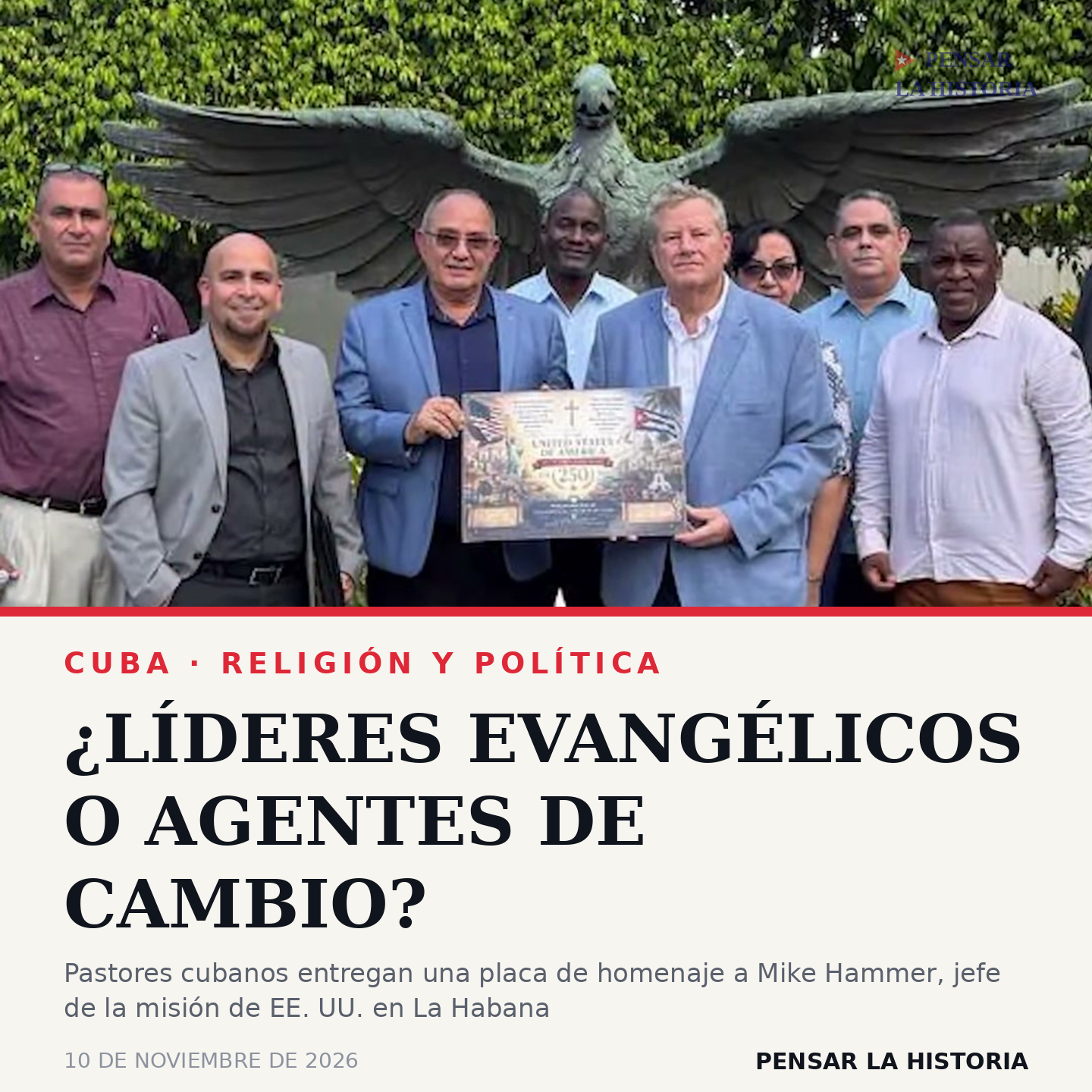
La escena ocurrió en La Habana y la difundió la propia Embajada de Estados Unidos: un grupo de líderes evangélicos cubanos, de traje y corbata, le entrega una placa conmemorativa a Mike Hammer, el encargado de negocios de Washington en Cuba. Hay foto oficial junto al águila de bronce, lectura solemne de un documento de agradecimiento por la solidaridad estadounidense y por la defensa de la libertad religiosa, y después un almuerzo con los funcionarios de la legación. La embajada lo presentó con su etiqueta de campaña: «Con cubanos de a pie».
Nada de eso es improvisado. Es la versión cubana de un fenómeno que América Latina conoce desde hace décadas y que hoy decide elecciones, tumba reformas y pone presidentes: la conversión de las iglesias evangélicas en maquinaria política, una maquinaria que ha servido, país tras país, para contrarrestar a los movimientos de izquierda e imponer políticas favorables a Estados Unidos.
EL MODELO YA PROBADO
Brasil es el laboratorio mayor. Los evangélicos pasaron del 15 % de la población en el año 2000 al 27 % en el censo de 2022, y hoy rondan el 30 %. En el Congreso Nacional, la llamada bancada evangélica reúne a unos 210 diputados de 513, el 40 % de la Cámara Baja, con capacidad de veto sobre reformas, presupuesto y designaciones judiciales. Pastores como Silas Malafaia, con imperios de templos y millones de seguidores en redes, se sientan a negociar con los candidatos como si fueran jefes de partido. Fueron decisivos en la victoria de Jair Bolsonaro en 2018, y en la segunda vuelta de este año el voto evangélico volvió a inclinarse en masa por el bolsonarismo: según Datafolha, Flávio Bolsonaro sacó entre los evangélicos una ventaja aplastante sobre Lula. Las iglesias mayores, como la Universal del Reino de Dios, controlan canales de televisión y emisoras: el púlpito es también un medio de comunicación.
Guatemala fue el anticipo: un país donde alrededor del 40 % de la población es evangélica y donde un general evangélico, Efraín Ríos Montt, llegó al poder en 1982 con bendición de las iglesias estadounidenses. En Costa Rica, los partidos evangélicos negocian candidaturas y acuerdos de gobierno. En Perú, pastores convertidos en congresistas empujan su agenda desde el Parlamento. En El Salvador, Nayib Bukele cortejó a los pastores desde su primera campaña. El patrón se repite: donde la izquierda crece, el púlpito se organiza; y el voto de la fe, disciplinado y semanal, termina pesando más que el de muchos partidos.
LA ARQUITECTURA QUE VIENE DE WASHINGTON
Nada de esto es ajeno a la política exterior de Estados Unidos. Desde 1998, con su ley de libertad religiosa internacional, Washington convirtió la religión en un instrumento declarado de su diplomacia, con oficinas, embajadores y reportes anuales que señalan a los países «violadores». La propia prensa estadounidense lo resume sin tapujos: Religion News Service escribió que las administraciones republicanas han visto desde hace mucho a los grupos de fe como una piedra angular de la ayuda humanitaria y de la confianza comunitaria mientras empujan el cambio de régimen en Cuba.
En el caso cubano, el diseño tiene fecha y firma. En 2004, la Comisión para la Asistencia a una Cuba Libre del gobierno de George W. Bush ya describía el papel que debían jugar las iglesias en la Cuba que Washington imaginaba. Entre los citados en aquel informe estaba Teo Babún, presidente de Outreach Aid to the Americas, la organización que hoy distribuye ayuda en la isla a través de iglesias evangélicas. Dos décadas después, el guion se ejecuta: el programa de ayuda de 100 millones de dólares aprobado por el gobierno de Trump entra a Cuba por las iglesias, 60 millones de ellos canalizados por la Iglesia católica a través de Cáritas, y el encargado de negocios recorre el país visitando pastores, sacerdotes y opositores con cámara en mano.
EN CUBA, LA MAQUINARIA ESTÁ EN CONSTRUCCIÓN
En Cuba el fenómeno es más joven, pero ya enseñó los dientes. Las iglesias evangélicas crecieron desde los años noventa, al calor de la crisis, y en 2018 dieron su primera gran demostración de fuerza política: la campaña contra el artículo 68 del proyecto de Constitución, que abría la puerta al matrimonio igualitario. La Liga Evangélica de Cuba y las Asambleas de Dios anunciaron la recogida de 500.000 firmas entre sus fieles y amenazaron con rechazar el texto completo. El artículo fue retirado. En 2022 repitieron la movilización contra el Código de las Familias.
La diferencia con Brasil es de escenario, no de fondo. En Cuba no hay un mercado electoral que capturar, así que la moneda de esta primera etapa es otra: la distribución de la ayuda, la autoridad moral en los barrios y el cultivo paciente de la embajada. Es la infraestructura que se construye antes de que exista la contienda. La placa entregada a Hammer es la punta visible de ese trabajo: un acto de alineamiento público, grabado y difundido por la propia legación, en el que los pastores no bendicen a un feligrés, sino que honran al jefe de la misión de la potencia que mantiene el bloqueo.
Conviene decirlo con claridad: millones de creyentes cubanos y latinoamericanos viven su fe con sinceridad, y nadie discute su derecho a creer y a organizarse. Lo que está en cuestión no es la fe. Es la maquinaria política montada sobre ella, con financiación, estrategia y patrocinio de una potencia extranjera, la misma que en Brasil ya pone y quita presidentes y que en Cuba está poniendo, pieza a pieza, los cimientos.
Por eso la pregunta del titular no es retórica. Cuando la historia de América Latina muestra adónde conduce este camino, la placa de La Habana deja de ser una anécdota: ¿son líderes evangélicos que ejercen su fe, o son los agentes de cambio de un guión escrito fuera? Los leo en los comentarios.
The scene took place in Havana and was publicized by the United States Embassy itself: a group of Cuban evangelical leaders, in suits and ties, presents a commemorative plaque to Mike Hammer, Washington's chargé d'affaires in Cuba. There is an official photo next to the bronze eagle, a solemn reading of a document thanking the United States for its solidarity and for its defense of religious freedom, and then a lunch with the legation's officials. The embassy presented it with its campaign label: "With ordinary Cubans."
None of it is improvised. It is the Cuban version of a phenomenon Latin America has known for decades and that today decides elections, brings down reforms and installs presidents: the conversion of evangelical churches into political machinery, a machinery that has served, country after country, to counter leftist movements and impose policies favorable to the United States.
THE MODEL, ALREADY TESTED
Brazil is the largest laboratory. Evangelicals went from 15% of the population in 2000 to 27% in the 2022 census, and today they stand at around 30%. In the National Congress, the so-called evangelical caucus brings together some 210 of 513 deputies, 40% of the Lower House, with veto power over reforms, the budget and judicial appointments. Pastors like Silas Malafaia, with empires of temples and millions of followers on social media, sit down to negotiate with candidates as if they were party bosses. They were decisive in Jair Bolsonaro's victory in 2018, and in this year's runoff the evangelical vote once again swung en masse toward Bolsonarismo: according to Datafolha, Flávio Bolsonaro opened an overwhelming lead over Lula among evangelicals. The largest churches, such as the Universal Church of the Kingdom of God, control television channels and radio stations: the pulpit is also a media outlet.
Guatemala was the preview: a country where around 40% of the population is evangelical and where an evangelical general, Efraín Ríos Montt, came to power in 1982 with the blessing of U.S. churches. In Costa Rica, evangelical parties negotiate candidacies and government agreements. In Peru, pastors turned congressmen push their agenda from Parliament. In El Salvador, Nayib Bukele courted pastors from his very first campaign. The pattern repeats itself: where the left grows, the pulpit organizes; and the vote of faith, disciplined and weekly, ends up weighing more than that of many parties.
THE ARCHITECTURE THAT COMES FROM WASHINGTON
None of this is foreign to United States foreign policy. Since 1998, with its international religious freedom law, Washington turned religion into a declared instrument of its diplomacy, with offices, ambassadors and annual reports that single out "violator" countries. The U.S. press itself sums it up bluntly: Religion News Service wrote that Republican administrations have long viewed faith groups as a cornerstone of humanitarian aid and community trust while they push for regime change in Cuba.
In the Cuban case, the design has a date and a signature. In 2004, the Commission for Assistance to a Free Cuba of the George W. Bush administration was already describing the role churches were to play in the Cuba Washington imagined. Among those quoted in that report was Teo Babún, president of Outreach Aid to the Americas, the organization that today distributes aid on the island through evangelical churches. Two decades later, the script is being carried out: the 100-million-dollar aid program approved by the Trump administration enters Cuba through the churches, 60 million of it channeled by the Catholic Church through Cáritas, and the chargé d'affaires tours the country visiting pastors, priests and opponents with a camera in hand.
IN CUBA, THE MACHINERY IS UNDER CONSTRUCTION
In Cuba the phenomenon is younger, but it has already bared its teeth. Evangelical churches grew from the 1990s onward, in the heat of the crisis, and in 2018 they gave their first great demonstration of political strength: the campaign against Article 68 of the draft Constitution, which opened the door to same-sex marriage. The Evangelical League of Cuba and the Assemblies of God announced the collection of 500,000 signatures among their faithful and threatened to reject the entire text. The article was withdrawn. In 2022 they repeated the mobilization against the Family Code.
The difference with Brazil is one of setting, not of substance. In Cuba there is no electoral market to capture, so the currency of this first stage is something else: the distribution of aid, moral authority in the neighborhoods and the embassy's patient cultivation. It is the infrastructure that is built before any contest exists. The plaque presented to Hammer is the visible tip of that work: a public act of alignment, recorded and disseminated by the legation itself, in which the pastors do not bless a parishioner, but instead honor the head of mission of the power that maintains the blockade.
It should be said clearly: millions of Cuban and Latin American believers live their faith sincerely, and no one disputes their right to believe and to organize. What is in question is not faith. It is the political machinery mounted on top of it, with financing, strategy and sponsorship from a foreign power, the same one that in Brazil already installs and removes presidents and that in Cuba is laying, piece by piece, the foundations.
That is why the question in the headline is not rhetorical. When Latin America's history shows where this road leads, the plaque in Havana stops being an anecdote: are they evangelical leaders exercising their faith, or are they the agents of change of a script written abroad? I read you in the comments.