Díaz-Canel inaugura el sistema de baterías Habana 220, de 50 MW, junto a la CUJAEDíaz-Canel inaugurates the 50 MW Habana 220 battery storage system near the CUJAE
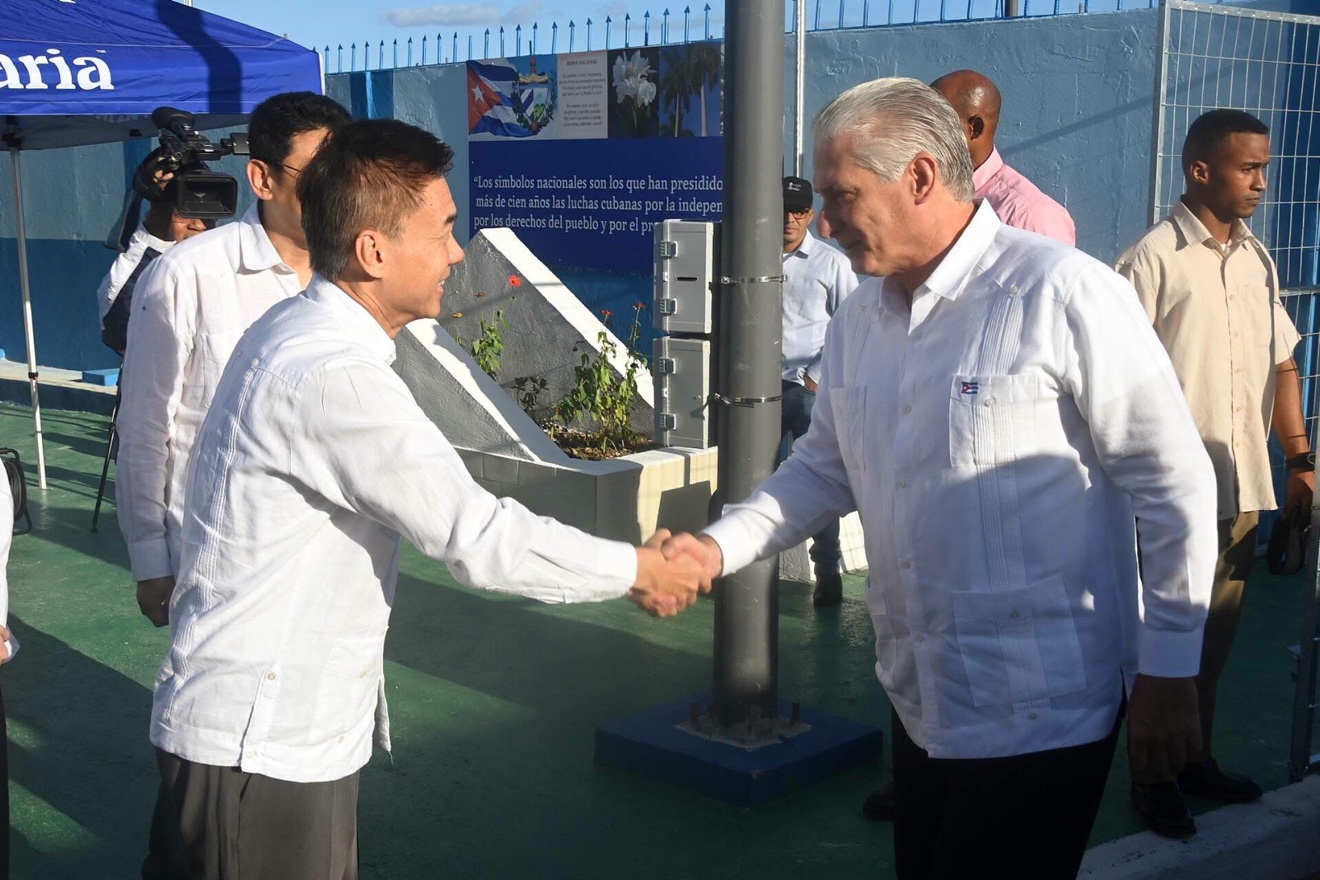
El presidente Miguel Díaz-Canel Bermúdez inauguró este jueves el Sistema de Almacenamiento de Energía en Baterías Habana 220, instalado en las cercanías de la Universidad Tecnológica de La Habana (CUJAE), en la capital. En la foto, el mandatario saluda al representante chino en el emplazamiento, en una jornada dedicada también a chequear obras estratégicas de la ciudad.
Es una tecnología de baterías de litio instalada con la colaboración de la República Popular China, con una capacidad de 50 MW de potencia y 50 MWh de energía almacenada. Su función primaria es regular la frecuencia del Sistema Eléctrico Nacional y mitigar los Disparos Automáticos de Frecuencia, el mecanismo de protección que desconecta circuitos cuando la frecuencia cae a niveles peligrosos y que también provoca apagones. Al ser un sistema formador de red, puede además aportar energía para levantar el sistema ante una caída general y permite subir la potencia que entregan los parques solares fotovoltaicos, cuya generación varía con el sol y necesita respaldo para integrarse a la red.
Habana 220 es uno de los cuatro sistemas de este tipo previstos en el país, de 50 MW cada uno, que en conjunto aportarán 200 MW de capacidad de almacenamiento. El primero, el de El Cotorro, también en La Habana, entró en servicio en julio de este año; el de Cueto, en Holguín, está en pruebas y podría entrar antes de que termine 2026, y el de Bayamo, en Granma, está previsto para inicios del próximo año. El cronograma original de Habana 220 preveía su entrada en línea el 30 de octubre, una fecha que no se cumplió; la inauguración de este jueves cierra esa espera.
La puesta en marcha ocurre en medio de la crisis energética que atraviesa el país: para este jueves la Unión Eléctrica pronosticó una afectación de 1.675 MW en el horario pico, con un déficit de 1.645 MW. Conviene tener clara la magnitud: estos sistemas no generan electricidad por sí mismos ni cubren el déficit de generación; su papel es estabilizar la red, absorber o inyectar energía en segundos para equilibrar generación y demanda, reducir los apagones que provocan las caídas de frecuencia y facilitar que la energía solar instalada rinda al máximo.
Fuentes: Presidencia Cuba, 26 de noviembre de 2026, y cobertura previa del programa de almacenamiento del Ministerio de Energía y Minas. Foto: Presidencia Cuba.
President Miguel Díaz-Canel Bermúdez inaugurated on Thursday the Habana 220 Battery Energy Storage System (BESS), installed near the Technological University of Havana (CUJAE), in the capital. In the photo, the president greets the Chinese representative at the site, on a day also devoted to checking strategic works in the city.
It is lithium battery technology installed with the collaboration of the People's Republic of China, with a capacity of 50 MW of power and 50 MWh of stored energy. Its primary function is to regulate the frequency of the National Electric System and mitigate Automatic Frequency Trips, the protection mechanism that disconnects circuits when frequency falls to dangerous levels and which also causes blackouts. As a grid-forming system, it can also supply energy to help restart the system after a general collapse and allows the solar photovoltaic parks to deliver more of their power, since their generation varies with the sun and needs backup to integrate into the grid.
Habana 220 is one of four such systems planned in the country, of 50 MW each, which together will provide 200 MW of storage capacity. The first, at El Cotorro, also in Havana, entered service in July of this year; the one at Cueto, in Holguín, is undergoing tests and could enter service before the end of 2026, and the one at Bayamo, in Granma, is planned for early next year. Habana 220's original schedule called for it to come online on October 30, a date that was not met; this Thursday's inauguration closes that wait.
The start-up comes amid the energy crisis the country is going through: for this Thursday the Electric Union forecast an impact of 1,675 MW at peak hours, with a deficit of 1,645 MW. The scale should be kept clear: these systems do not generate electricity by themselves nor do they cover the generation deficit; their role is to stabilize the grid, absorb or inject energy within seconds to balance generation and demand, reduce the blackouts caused by frequency drops and help the installed solar energy perform at its best.
Sources: Presidencia Cuba, November 26, 2026, and earlier coverage of the Energy and Mines Ministry storage program. Photo: Presidencia Cuba.