Lo que el cardenal O'Malley dijo en La Habana y reveló después en EWTNWhat Cardinal O'Malley said in Havana and revealed later to EWTN
El cardenal estadounidense Seán Patrick O'Malley reveló en una entrevista con EWTN News, publicada este miércoles 25 de noviembre, lo que planteó a las autoridades cubanas durante su reciente visita a La Habana: que a menos que liberen a los presos políticos y hagan «gestos muy dramáticos», será muy difícil iniciar un diálogo con Washington, y que, mientras tanto, será el pueblo cubano el que sufra.
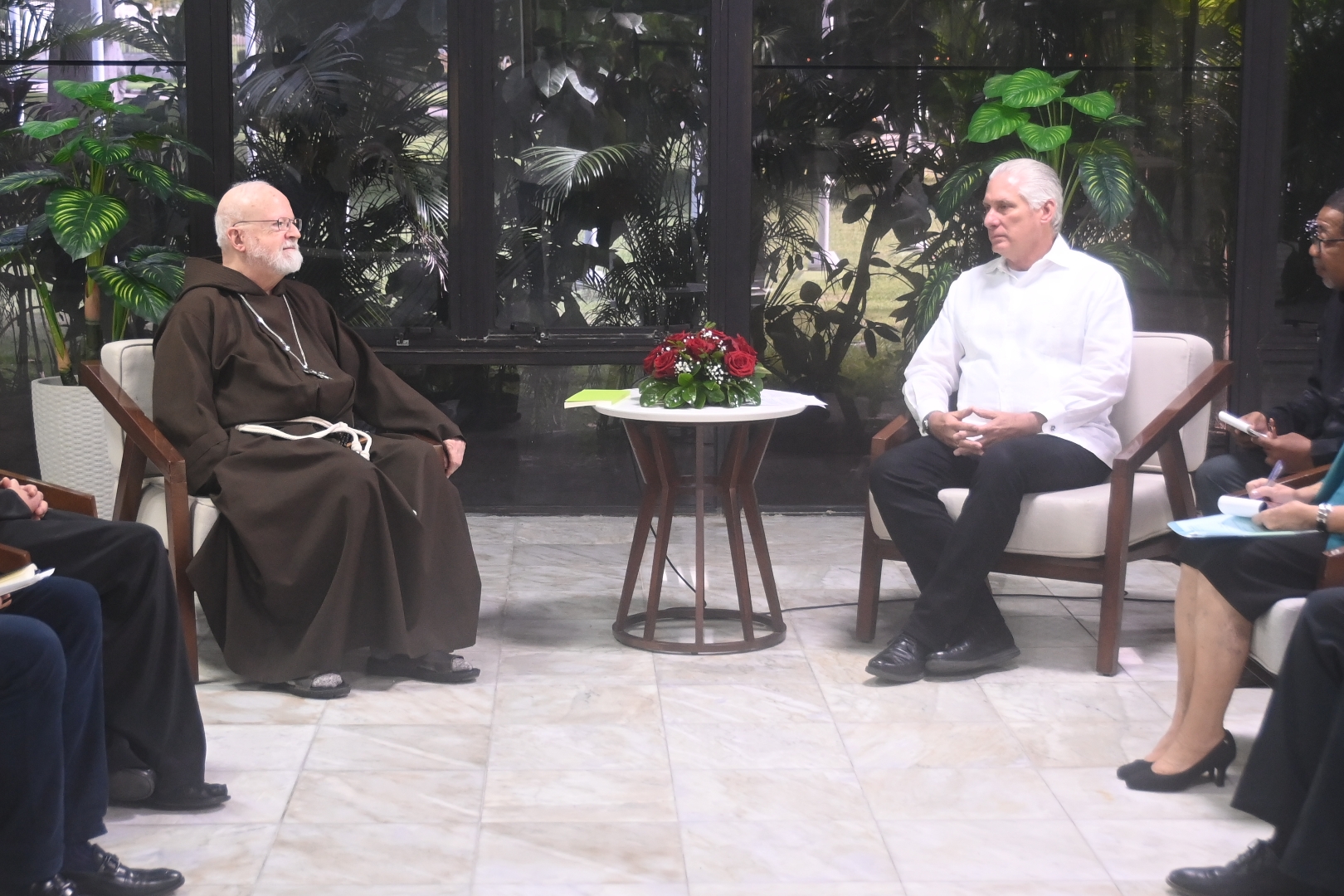
O'Malley, arzobispo emérito de Boston, encabezó a mediados de noviembre una delegación de la Conferencia de Obispos Católicos de Estados Unidos. El sábado 14 fue recibido por el presidente Miguel Díaz-Canel Bermúdez en el Palacio de Convenciones, junto al arzobispo Borys Gudziak, Christopher Ljungquist y Mario Jesús Paredes. La información oficial cubana de aquel encuentro recogió el intercambio sobre la realidad de ambos países y el agradecimiento del mandatario por el papel de la Iglesia en la ayuda humanitaria; del tema de los presos no se dijo nada entonces.
La entrevista la concedió el 17 de noviembre, durante la asamblea plenaria de otoño de los obispos estadounidenses. El propósito principal del viaje, explicó, fue la distribución de la ayuda humanitaria: al menos el 60 por ciento de los 100 millones de dólares anunciados por Washington en mayo se canaliza a través de organizaciones católicas, Cáritas Cuba y Catholic Relief Services. Aun así, consideró la cifra insuficiente: aunque 100 millones suenan a mucha ayuda para un país de unos nueve millones de personas, con la crisis humanitaria que están viviendo, no alcanza.
El cardenal, que visita la isla desde hace 42 años, aseguró que nunca había visto la situación peor: hospitales que no pueden funcionar, falta de combustible, basura acumulada en las calles, enfermedades transmitidas por mosquitos y comunidades que aún se recuperan del huracán Melissa. Sobre las causas, apuntó en dos direcciones: el sistema económico estatal «no ha funcionado», y las sanciones estadounidenses «han tenido un gran impacto». Recordó que los obispos llevan décadas abogando por la normalización de las relaciones y por detener las sanciones, una vía que Washington ha asociado a un cambio de régimen: «Todavía no ha funcionado».
O'Malley contó también que los funcionarios cubanos le expresaron su disposición a dialogar y su preocupación ante una posible acción militar de Estados Unidos, y que el Presidente le dijo que se preparaban para defenderse. De Marco Rubio y otros funcionarios estadounidenses dijo que se muestran muy cautelosos ante la idea del diálogo. Su mensaje, concluyó, es el mismo para los dos gobiernos: poner primero las necesidades del pueblo cubano.
U.S. Cardinal Seán Patrick O'Malley revealed in an interview with EWTN News, published this Wednesday, November 25, what he raised with the Cuban authorities during his recent visit to Havana: that unless they release the political prisoners and make "very dramatic gestures," it will be very difficult to initiate a dialogue with Washington, and that, in the meantime, it will be the Cuban people who suffer.
O'Malley, Archbishop Emeritus of Boston, led a delegation of the United States Conference of Catholic Bishops in mid-November. On Saturday the 14th he was received by President Miguel Díaz-Canel Bermúdez at the Palace of Conventions, together with Archbishop Borys Gudziak, Christopher Ljungquist and Mario Jesús Paredes. The official Cuban account of that meeting covered the exchange on the reality of both countries and the president's thanks for the Church's role in humanitarian aid; nothing was said then about the prisoners.
He gave the interview on November 17, during the fall plenary assembly of the U.S. bishops. The main purpose of the trip, he explained, was the distribution of humanitarian aid: at least 60 percent of the 100 million dollars announced by Washington in May is channeled through Catholic organizations, Cáritas Cuba and Catholic Relief Services. Even so, he considered the figure insufficient: although 100 million sounds like a lot of aid for a country of some nine million people, with the humanitarian crisis they are living through, it is not enough.
The cardinal, who has been visiting the island for 42 years, said he had never seen the situation worse: hospitals that cannot function, lack of fuel, garbage piling up in the streets, mosquito-borne diseases and communities still recovering from Hurricane Melissa. On the causes, he pointed in two directions: the state-run economic system "has not worked," and U.S. sanctions "have had a big impact." He recalled that the bishops have advocated for decades for the normalization of relations and for stopping the sanctions, a path Washington has associated with regime change: "It hasn't worked yet."
O'Malley also said Cuban officials expressed to him their willingness to dialogue and their concern about a possible U.S. military action, and that the President told him they were preparing to defend themselves. Of Marco Rubio and other U.S. officials he said they are very guarded about the idea of dialogue. His message, he concluded, is the same for both governments: put the needs of the Cuban people first.