CADECA COMPITE CON LA CALLE: COMPRA EL DÓLAR A 913 PESOSCADECA TAKES ON THE STREET: IT BUYS THE DOLLAR AT 913 PESOS
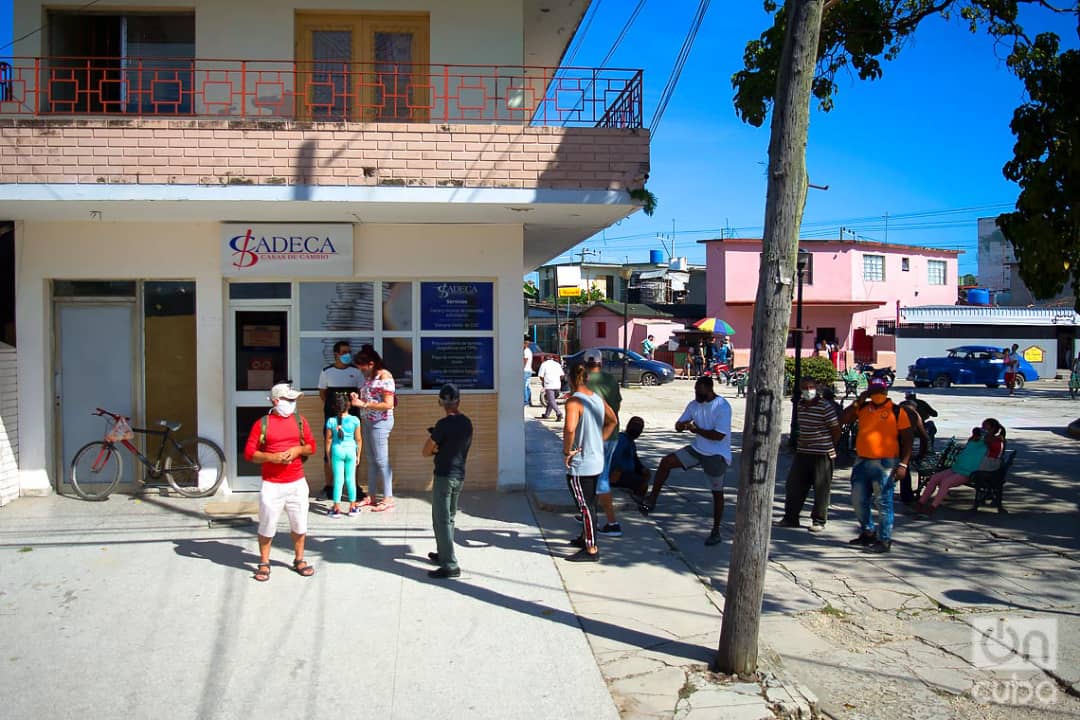
CADECA amaneció este jueves con una cotización que no se había visto en Cuba: la casa de cambio estatal compra el dólar a 913 pesos, por encima de lo que hoy se paga en la calle, y lo vende a 938. El euro lo compra a 995 y lo vende a 1.000. La propia institución presentó el cambio en sus redes sociales como «una tasa de cambio más atractiva y competitiva», y ya se reportan personas acudiendo a las oficinas a vender sus divisas.
LOS NÚMEROS DE HOY
En las casas de cambio de CADECA, el dólar se compra a 913 pesos y se vende a 938; en hoteles y aeropuertos la venta sube a 943. El euro se compra a 995 y se vende a 1.000. En la calle, el dólar se mueve hoy en torno a 910 pesos, tras encadenar varios días de descenso, y el euro se mantiene en 1.000. Es decir: por el dólar, la ventanilla estatal paga hoy tres pesos más que el mercado informal.
DOS TASAS DEL MISMO ESTADO
El contraste mayor no es con la calle, sino dentro del propio Estado. El Banco Central mantiene este jueves el dólar en 820 pesos en su Segmento III, la tasa oficial que esta página publica cada mañana, y el euro en 909,71. CADECA compra el dólar 93 pesos por encima de esa referencia y lo vende 118 pesos más caro; en el euro, las diferencias son de unos 85 pesos en la compra y 90 en la venta. El mismo día, el mismo billete, dos precios estatales muy distintos.
LO QUE NO SE HA EXPLICADO
Ni CADECA ni el Banco Central han ofrecido hasta ahora una explicación pública sobre los criterios de esta nueva cotización, ni sobre las razones por las que la casa de cambio estatal aplica valores diferentes a los que publica el propio Banco Central. La nota de CADECA se limita a hablar de modernización y de acercarse a las necesidades de la población.
QUÉ PUEDE ESTAR DETRÁS
El movimiento llega cuando el dólar en la calle lleva días bajando y tiene una lectura clara: disputarle al mercado informal las divisas que entran al país, sobre todo las remesas, ofreciendo un precio que por fin compite. Si la cotización se mantiene y hay efectivo en ventanilla, parte de ese flujo puede pasar al circuito formal; si es un gesto de un día, la calle seguirá mandando.
Desde hoy, esta página publica cada día la cotización de CADECA junto a la tasa oficial del Banco Central, para seguir el pulso de las dos ventanillas: https://www.plhcuba.com/tasa-oficial
CADECA opened this Thursday with an exchange rate never seen before in Cuba: the state-run exchange house buys the dollar at 913 pesos, above what the street pays today, and sells it at 938. It buys the euro at 995 and sells it at 1,000. The institution itself presented the change on its social media as a 'more attractive and competitive exchange rate,' and people are already being reported going to its offices to sell their foreign currency.
TODAY'S NUMBERS
At CADECA exchange houses, the dollar is bought at 913 pesos and sold at 938; at hotels and airports the selling price rises to 943. The euro is bought at 995 and sold at 1,000. On the street, the dollar trades today at around 910 pesos, after several straight days of decline, and the euro holds at 1,000. In other words, for the dollar, the state window pays three pesos more today than the informal market.
TWO RATES FROM THE SAME STATE
The sharpest contrast is not with the street, but within the state itself. The Central Bank keeps the dollar this Thursday at 820 pesos in its Segment III, the official rate this page publishes every morning, and the euro at 909.71. CADECA buys the dollar 93 pesos above that benchmark and sells it 118 pesos higher; for the euro, the gaps are about 85 pesos on the buy side and 90 on the sell side. Same day, same bill, two very different state prices.
WHAT HAS NOT BEEN EXPLAINED
Neither CADECA nor the Central Bank has so far offered a public explanation of the criteria behind this new rate, or of why the state exchange house applies values different from those published by the Central Bank itself. CADECA's announcement speaks only of modernization and of getting closer to the population's needs.
WHAT MAY BE BEHIND IT
The move comes as the street dollar has been falling for days, and it reads clearly: to dispute with the informal market the foreign currency entering the country, above all remittances, by offering a price that finally competes. If the rate holds and there is cash at the window, part of that flow may move into the formal circuit; if it is a one-day gesture, the street will keep ruling.
Starting today, this page publishes CADECA's rate every day alongside the Central Bank's official rate, to follow the pulse of both windows: https://www.plhcuba.com/tasa-oficial