«CUBA NO ES UNA AMENAZA, EL BLOQUEO SÍ»: BRUNO RODRÍGUEZ RESPONDE AL G7'CUBA IS NOT A THREAT, THE BLOCKADE IS': BRUNO RODRÍGUEZ ANSWERS THE G7
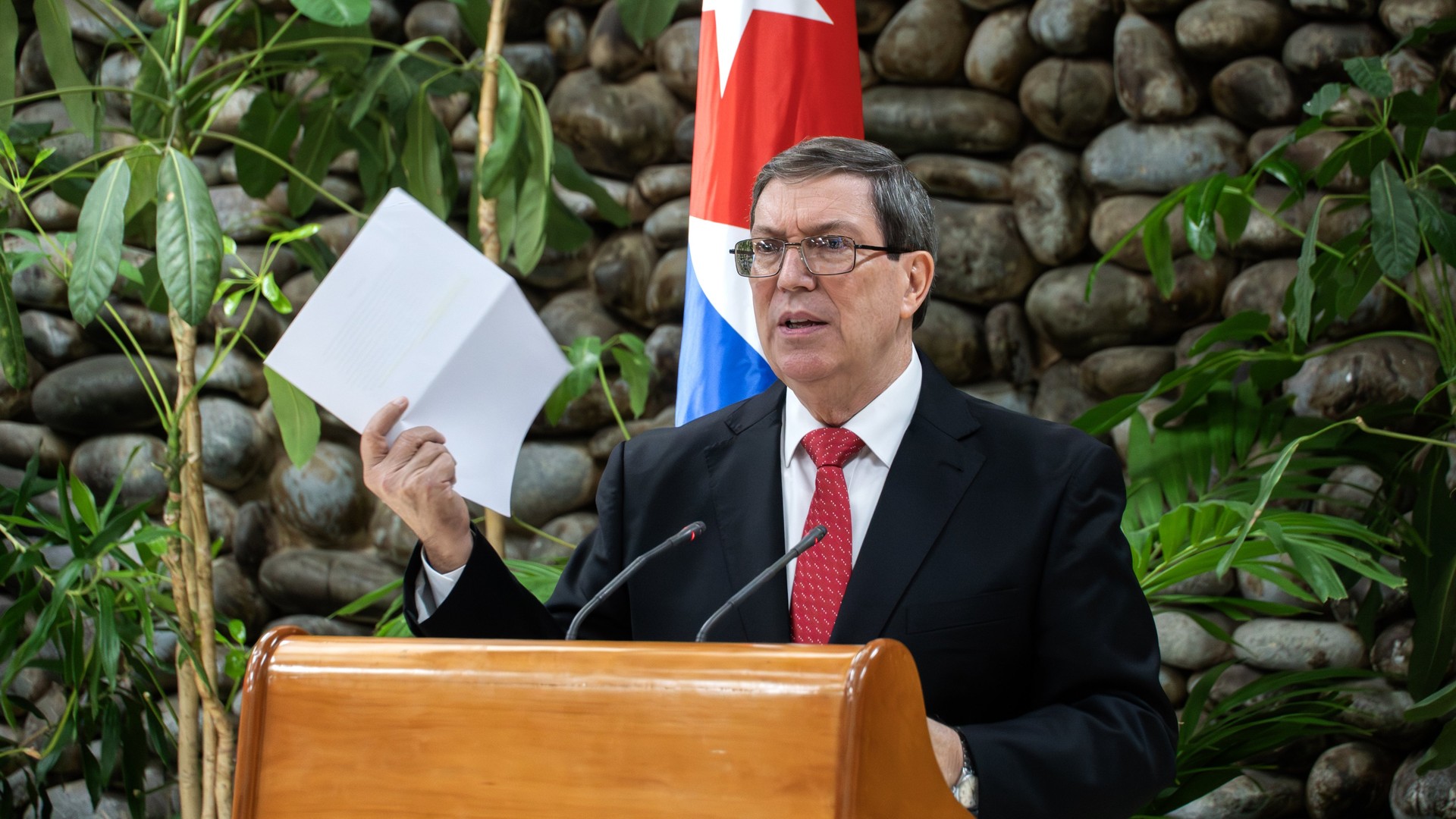
El ministro de Relaciones Exteriores de Cuba, Bruno Rodríguez Parrilla, respondió este jueves a la declaración conjunta de los cancilleres del G7 con una acusación directa: el grupo de las siete potencias «opta por repetir falsos argumentos fabricados» por Estados Unidos «para justificar el criminal bloqueo» contra la isla. El mensaje, publicado en su cuenta de la red social X, llegó mientras el canciller cumple su agenda oficial en China, y cierra con la frase que La Habana repite en todos los foros: «Cuba no es una amenaza, el bloqueo sí».
LO QUE DIJO EL CANCILLER
En su mensaje, Rodríguez sostuvo que «la reciente declaración de reunión de cancilleres del G7 omite la realidad del cruel impacto del bloqueo, la guerra económica y el cerco energético del Gobierno de Estados Unidos contra Cuba, que constituye una violación flagrante, masiva y sistemática de los Derechos Humanos del pueblo cubano y viola la soberanía de terceros Estados».
El canciller calificó esa política de genocida y recordó que fue censurada «una vez más por la comunidad internacional recientemente en la Asamblea General de Naciones Unidas». El pasado 28 de octubre, la Asamblea aprobó por trigésimo cuarto año la resolución que pide poner fin al bloqueo, con 130 votos a favor, 17 en contra y 25 abstenciones.
LO QUE PIDIÓ EL G7
La declaración salió de la reunión de ministros de Exteriores celebrada en París los días 9 y 10 de noviembre, con Estados Unidos, Canadá, Francia, Alemania, Italia, Japón y Reino Unido, además de la representación de la Unión Europea, y se difundió el miércoles. En su apartado sobre Cuba, el texto expresa «inquietud» por la profunda crisis económica y las necesidades humanitarias de la isla, y solicita medidas concretas hacia una gobernanza democrática multipartidista, la liberación de las personas detenidas que considera arbitrarias, garantías para la libertad de prensa y de asociación y un «diálogo constructivo e inclusivo».
Lo que el documento no contiene es una sola mención al bloqueo económico, comercial y financiero que Estados Unidos mantiene sobre Cuba, reforzado desde enero con el cerco energético que amenaza con aranceles a los países que suministren combustible a la isla. Esa omisión es el centro de la respuesta cubana: para La Habana, hablar de la crisis sin nombrar su causa principal es reproducir el argumento de Washington.
UNA SEMANA DE CRUCES
La respuesta de Bruno no es un hecho aislado. En esa misma reunión de París, el secretario de Estado Marco Rubio aseguró que el «objetivo final» de Estados Unidos es que Cuba tenga «un futuro mejor», a lo que el presidente Miguel Díaz-Canel respondió que «el futuro de Cuba no se decidirá jamás al norte». El mensaje del canciller se suma ahora a ese cruce y traslada la discusión al terreno que Cuba domina cada año en la ONU: el del bloqueo y su costo humano.
Cuba's Minister of Foreign Affairs, Bruno Rodríguez Parrilla, answered the G7 foreign ministers' joint statement this Thursday with a direct accusation: the group of seven powers "chooses to repeat false arguments fabricated" by the United States "to justify the criminal blockade" against the island. The message, posted on his X account, arrived while the foreign minister carries out his official agenda in China, and closes with the phrase Havana repeats in every forum: "Cuba is not a threat, the blockade is."
WHAT THE FOREIGN MINISTER SAID
In his message, Rodríguez held that "the recent statement of the G7 foreign ministers' meeting omits the reality of the cruel impact of the blockade, the economic war and the energy siege of the United States Government against Cuba, which constitutes a flagrant, massive and systematic violation of the Human Rights of the Cuban people and violates the sovereignty of third States."
The foreign minister called that policy genocidal and recalled that it was censured "once again by the international community recently at the United Nations General Assembly." On October 28, the Assembly approved for the thirty-fourth year the resolution calling for an end to the blockade, with 130 votes in favor, 17 against and 25 abstentions.
WHAT THE G7 ASKED FOR
The statement came out of the foreign ministers' meeting held in Paris on November 9 and 10, with the United States, Canada, France, Germany, Italy, Japan and the United Kingdom, plus the representation of the European Union, and was released on Wednesday. In its section on Cuba, the text expresses "concern" over the island's deep economic crisis and humanitarian needs, and requests concrete measures toward multiparty democratic governance, the release of persons it considers arbitrarily detained, guarantees for freedom of the press and of association, and a "constructive and inclusive dialogue."
What the document does not contain is a single mention of the economic, commercial and financial blockade the United States maintains on Cuba, reinforced since January with the energy siege that threatens tariffs on countries that supply fuel to the island. That omission is the center of the Cuban response: for Havana, speaking of the crisis without naming its main cause is to reproduce Washington's argument.
A WEEK OF EXCHANGES
Bruno's response is not an isolated event. At that same Paris meeting, Secretary of State Marco Rubio stated that the United States' "final objective" is for Cuba to have "a better future," to which President Miguel Díaz-Canel replied that "Cuba's future will never be decided to the north." The foreign minister's message now joins that exchange and moves the discussion onto the ground Cuba commands every year at the UN: the blockade and its human cost.